Custom Software Development Services & Enterprise Digital Engineering | Fekra Labs
We architect, engineer, and deploy high-velocity, mission-critical custom software systems tailored with surgical precision to your proprietary operating models. Combining cloud-native distributed architecture, zero-trust security postures, and strict SLA-backed delivery, we empower market leaders across Egypt, Saudi Arabia, and the United Arab Emirates to eliminate off-the-shelf software constraints and achieve unassailable competitive advantage.
What are Custom Software Development Services at Fekra Labs?
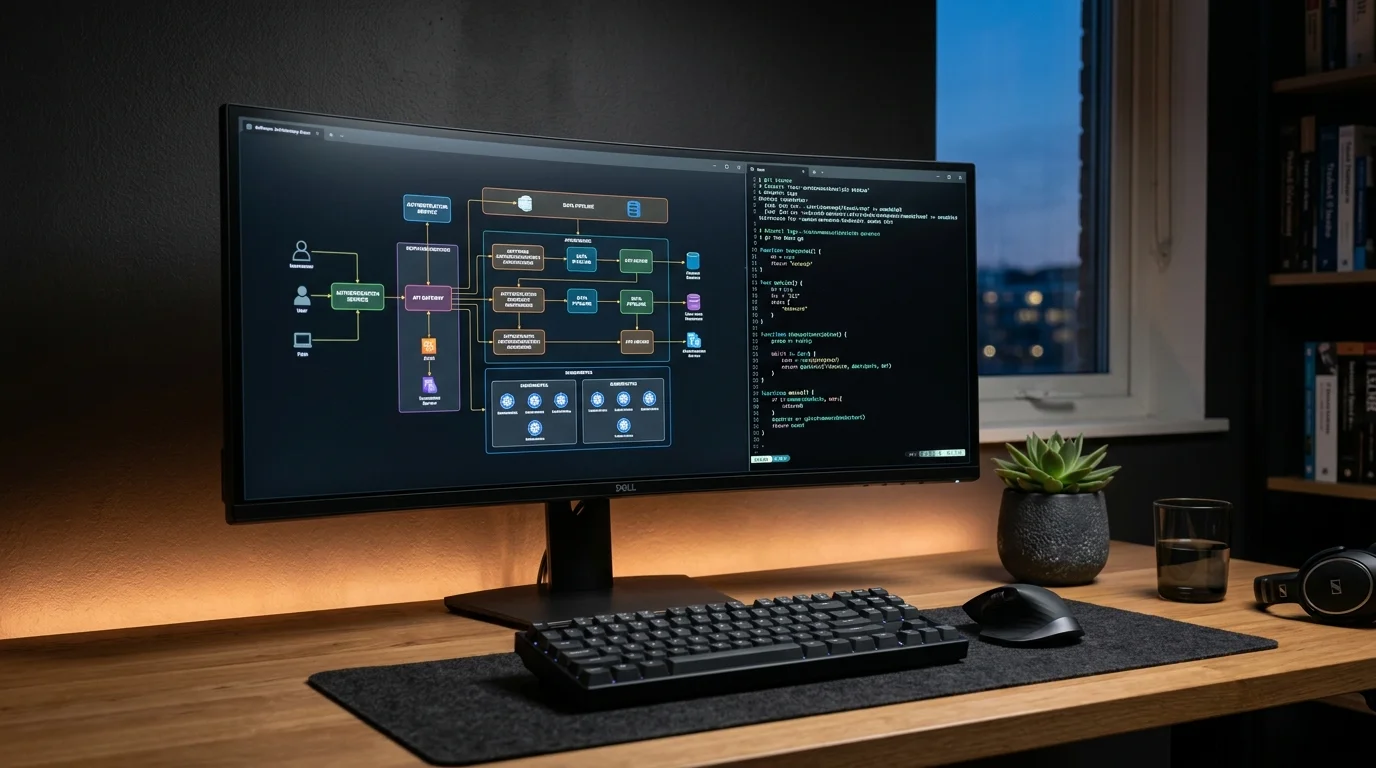
Custom Software Development Services at Fekra Labs encompass end-to-end bespoke software engineering designed specifically for enterprises that have outgrown off-the-shelf software packages. Our services cover domain-driven systems architecture, high-concurrency cloud-native backend development (Node.js, Go, Python), sub-second interactive frontends (Next.js, TypeScript), cross-platform enterprise mobile applications (Flutter), distributed database modeling (PostgreSQL, Redis, ClickHouse), and automated CI/CD infrastructure with zero-trust security. Every solution is delivered with 100% unencumbered intellectual property ownership, zero per-seat licensing fees, and guaranteed backward and forward API compatibility.
1. Strategic Executive Overview & Business Value Proposition
Transforming Enterprise Operations from Constrained Software Renters into Sovereign Digital Leaders
Enterprise custom software engineering represents the highest tier of digital capability for organizations operating in competitive, highly regulated, and rapidly evolving regional markets such as Egypt, Saudi Arabia, and the United Arab Emirates. While generic commercial software promises rapid deployment, it inevitably forces high-growth enterprises to compromise their unique operational advantages, subjecting their workflows to rigid pre-packaged templates, exposing their sensitive customer data to third-party multi-tenant environments, and saddling their balance sheets with perpetual, escalating per-seat software licensing fees.
At Fekra Labs, we build bespoke software systems designed from the ground up to mirror your enterprise operational DNA. We combine domain-driven design (DDD), cloud-native microservices architecture, strict zero-trust security postures, and sub-second web and mobile interfaces to construct digital assets that deliver enduring strategic moat. Our engineering engagements are structured to eradicate technical debt, guarantee 100% intellectual property (IP) ownership, and ensure seamless interoperability across your existing legacy databases, enterprise resource planning (ERP) suites, and mission-critical payment gateways.
Target Organizations for Enterprise Custom Software Engineering
Our bespoke software engineering practice is tailored for established enterprises and ambitious mid-market leaders that require bespoke precision: 1. Regulated Financial Institutions & FinTech Platforms: Banks, microfinance corporations, payment aggregators, and digital lending institutions that must adhere strictly to Central Bank data residency mandates, PCI-DSS Level 1 specifications, and low-latency transactional integrity under volatile transaction spikes. 2. Healthcare Networks & Diagnostic Laboratories: Hospital conglomerates, specialized clinics, and clinical research organizations requiring unified electronic medical records (EMR/EHR), automated laboratory information management systems (LIMS), and telemedicine portals that comply rigorously with Egypt's Data Protection Law (Law 151) and Saudi Seha/NDMO data sovereignty frameworks. 3. Complex Supply Chain & Industrial Manufacturing Conglomerates: Factory operators, cold-chain distribution networks, and logistics providers requiring custom shop-floor execution systems (MES), automated multi-depot fleet dispatch routing, dynamic warehouse management systems (WMS), and real-time telemetry pipelines directly integrated with PLC machinery. 4. Fast-Growing Technology Startups & Scale-ups: Venture-backed SaaS enterprises requiring high-concurrency multi-tenant backends, automated subscription billing engines, and edge-rendered web applications capable of handling rapid regional expansion across North Africa and the GCC without architectural rewrites.Critical Operational Indicators Warranting Custom Software Investment
Organizations typically transition from commercial off-the-shelf software to custom engineering when they encounter distinct operational ceilings: - Proliferation of Disconnected Spreadsheets & Manual Workarounds: Departmental managers spend hundreds of hours each month manually exporting CSV files from different software suites, reconciling conflicting data points in Microsoft Excel, and risking catastrophic clerical errors. - Excessive Recurring Per-Seat Software Licensing Taxes: Software licensing costs scale exponentially as your head count grows. Mid-market companies often find themselves paying hundreds of thousands of dollars annually in per-user subscriptions for software where their teams only utilize 15% of the built-in feature set. - Inability to Adapt Workflows to New Regulatory Requirements: When regional authorities mandate real-time electronic invoicing (such as the Egyptian Tax Authority e-Invoicing system or Saudi ZATCA Phase 2), commercial software vendors often lag behind by months or charge exorbitant fees for regional compliance add-ons. - Sluggish System Latency & Unacceptable Downtime: Multi-tenant commercial SaaS applications suffer frequent regional latency spikes and unscheduled maintenance outages during peak business hours, degrading customer experience and interrupting core revenue operations.Quantifiable Operational ROI Delivered by Fekra Labs Engineering
- 60% to 80% Reduction in Operational Cycle Times: End-to-end workflow automation eliminates redundant manual approvals, automated document routing, and instant database reconciliation. - 100% Elimination of Per-Seat Licensing Expenditures: Zero recurring vendor license fees regardless of whether your platform serves 50 internal operators or 500,000 public users. - Sub-150ms p95 Global API Response Times: Highly optimized database indexing, distributed in-memory caching with Redis, and lightweight compiled microservices ensure lightning-fast interactions. - Absolute Sovereign Control Over Proprietary Assets: Complete unencumbered legal ownership of source code repositories, architectural blueprints, database schemas, and CI/CD deployment automation scripts.2. What is Custom Software Engineering? (Architectural Foundations)
Deconstructing Bespoke Software Architecture, Domain-Driven Design, and Polyglot Persistence
Custom software development is the disciplined, iterative engineering practice of conceptualizing, designing, architecting, programming, testing, deploying, and maintaining bespoke software applications engineered specifically to fulfill the exact operational, commercial, and technical specifications of a singular enterprise. Unlike commercial off-the-shelf software (COTS), which is manufactured to address the lowest-common-denominator requirements of thousands of disparate organizations, custom software treats your unique business rules, approval hierarchies, and proprietary customer experiences as the baseline architectural criteria.
The Four Foundational Pillars of Modern Custom Software Architecture
1. Domain-Driven Design (DDD) & Bounded Context Segregation
We organize software systems strictly around the core operational domains of your enterprise. By establishing explicit bounded contexts between distinct business capabilities—such as Inventory Management, Billing & Ledger, Customer Identity, and Dispatch Logistics—we prevent tightly coupled spaghetti code. Each bounded context encapsulates its own business logic and persistence models, communicating across context boundaries exclusively through strictly typed gRPC interfaces, asynchronous event buses (Apache Kafka, RabbitMQ), or versioned RESTful contracts conforming to OpenAPI 3.1 specifications.2. Cloud-Native Distributed Microservices & Event-Driven Resilience
Rather than constructing brittle monolithic codebases where a bug in a reporting module can crash the entire transactional payment gateway, we deploy distributed cloud-native microservices. Utilizing containerized services managed via Kubernetes (K8s) or lightweight container runners (AWS ECS, Google Cloud Run), our architectures leverage asynchronous messaging patterns to decouple compute-intensive operations. Workloads such as PDF invoice generation, batch financial settlements, and automated SMS dispatch are processed asynchronously through background worker queues, insulating the user-facing API gateway from performance degradation.3. Heterogeneous Polyglot Persistence & Data Integrity
Enterprise applications rarely benefit from forcing all data structures into a single database engine. We engineer heterogeneous polyglot persistence layers: - Relational Core (PostgreSQL 16+): Dedicated to ACID-compliant transactional processing, financial ledgers, and complex relational constraints, augmented by row-level security (RLS) and table partitioning for multi-million-row operational histories. - In-Memory Cache & Session Store (Redis 7+ Cluster): Deployed for high-velocity session caching, distributed locks, API rate-limiting tokens, and real-time leaderboards with sub-millisecond retrieval. - Analytical & Time-Series Engine (ClickHouse / TimescaleDB): Engineered for ultra-fast aggregation of millions of audit log entries, telemetry readings, and business intelligence metrics without burdening the primary operational OLTP database. - Distributed Semantic Search (Elasticsearch / OpenSearch / pgvector): Powering instant, typo-tolerant full-text search across complex enterprise product catalogs and document archives.4. Clean Architecture & Uncompromising Type Safety
We enforce Clean Architecture principles across all software layers. Business logic entities remain entirely agnostic of delivery mechanisms (HTTP controllers, CLI commands, or background event listeners) and persistence frameworks (ORMs or raw SQL drivers). Coupled with end-to-end strict TypeScript across frontend and backend services, compile-time type verification eliminates entire categories of runtime bugs, null-pointer exceptions, and contract mismatches prior to code deployment.3. Why Enterprise Leaders Choose Custom Software Over Commercial SaaS
Eliminating the Innovation Ceilings, Hidden Taxes, and Data Liabilities of Generic Software Packages
The strategic imperative to invest in custom software development stems from the compounding competitive disadvantage incurred by relying on standard off-the-shelf software. In the contemporary Middle Eastern and global marketplace, software is no longer merely an administrative utility—it is the direct instrument of market differentiation, customer loyalty, and operational margin expansion.
The Strategic Liabilities of Off-The-Shelf Commercial Software
1. The Inevitable 'Lowest Common Denominator' Constraint: Commercial SaaS vendors design products to be sold to thousands of diverse companies. Consequently, their features represent generalized compromises. When your business discovers an innovative delivery workflow, a novel pricing algorithm, or a unique customer loyalty model, commercial software cannot accommodate it without expensive, fragile plugins or multi-year feature requests that may never be prioritized by the vendor. 2. Escalating Recurring Licensing Penalties on Growth: Commercial software pricing models are fundamentally extractive: they charge per user, per branch, per record, or per transaction. As your business succeeds and expands its workforce, your software overhead compounds aggressively. A company scaling from 50 to 500 team members often experiences a tenfold increase in software subscription fees, transforming digital tools into a punishing tax on corporate expansion. 3. Vulnerability to Vendor Deprecation & Hostile Price Hikes: When you rely on third-party SaaS platforms, your mission-critical operations are held hostage to decisions made in external corporate boardrooms. Vendors routinely deprecate legacy features, alter API rate limits without consultation, or unilaterally double annual subscription rates, leaving your leadership team with zero negotiating leverage. 4. Data Siloing & Severe Analytical Blind Spots: Off-the-shelf platforms store your operational records inside proprietary databases. Extracting comprehensive historical datasets for cross-departmental machine learning or custom business intelligence reporting requires navigating restrictive API rate limits, complex data export fees, and fragmented schemas that obscure true operational visibility. 5. Regulatory Exposure Under Regional Data Residency Mandates: Many international SaaS providers host infrastructure across North American or European cloud regions. Operating these platforms for Middle Eastern enterprise customers risks non-compliance with national data protection legislation (such as Egypt's Law 151 and Saudi Arabia's Personal Data Protection Law), which impose strict penalties for unauthorized cross-border transfers of sensitive consumer and financial records.4. What Fekra Labs Delivers: Full-Spectrum Engineering Scope
From Architectural Blueprints to Production CI/CD Infrastructure: Complete Turnkey Ownership
Fekra Labs operates as a premier full-lifecycle software engineering and digital transformation consultancy. When you partner with us for enterprise custom software development, we do not simply supply temporary contractors or generic coding hours; we deploy dedicated, multidisciplinary product engineering squads that assume full end-to-end accountability for system architecture, software craftsmanship, deployment velocity, and ongoing operational stability.
Comprehensive Scope of Deliverables Provided by Fekra Labs
- Full Architectural Blueprinting & Technical Specifications: Before a single line of production code is written, our lead systems architects produce exhaustive C4 Architecture Diagrams, Entity-Relationship Models (ERDs), Sequence Diagrams, and Architectural Decision Records (ADRs) that document every technical rationale. - Production-Ready, Fully Tested Source Code Repositories: Pristine, modular codebases adhering strictly to Clean Code, SOLID principles, and enterprise design patterns. We configure comprehensive automated linting, security audits, and type-checking pipelines within your private GitLab or GitHub organizations. - Responsive Web & Native-Grade Mobile Applications: Accessible, lightning-fast client interfaces engineered with Next.js, React, and Flutter, featuring responsive design systems, dark/light themes, offline-first data caching, and native biometric security. - Enterprise Middleware & Integration Adapters: Custom-engineered connectors linking your new software seamlessly with legacy back-ends, SAP, Oracle NetSuite, Odoo, local payment gateways, SMS aggregators, and national tax authority e-invoicing servers. - Automated CI/CD Infrastructure as Code (IaC): Version-controlled Terraform scripts that automatically provision high-availability cloud environments (AWS, Microsoft Azure, Google Cloud, or on-premise private clouds) complete with auto-scaling groups, SSL termination, and zero-downtime blue/green deployment pipelines. - Unrestricted 100% Legal Ownership of Intellectual Property: Irrevocable, worldwide intellectual property assignment executed upon project milestone acceptance. You receive full legal copyright, complete source code access, design files, and deployment keys with zero trailing royalties or restrictive licensing clauses. - Comprehensive Technical Documentation & Operational Runbooks: Detailed developer documentation, interactive Swagger/OpenAPI documentation, disaster recovery runbooks, and video-recorded administrative training sessions ensuring your internal engineering personnel can independently operate the platform.5. Core Architectural & Engineering Capability Matrix
10 Enterprise Capabilities Engineered for High Concurrency, Zero Downtime, and Fault Tolerance
Our engineering capabilities span the entire spectrum of modern distributed systems design, data architecture, security hardening, and high-velocity interface development:
- Domain-Driven Microservices Architecture: We design decoupled backend microservices communicating via high-performance gRPC protocols and event streams (Apache Kafka, RabbitMQ). This architecture eliminates monolithic bottlenecks, isolates operational failures, and allows individual engineering teams to deploy updates autonomously without system-wide coordination.
- Next.js & React Enterprise Web Portals: Engineering sub-second interactive portals leveraging Next.js Server Components, Partial Prerendering, and Edge Caching. Our frontends achieve 100/100 Google Lighthouse performance scores, comply with WCAG 2.1 AA accessibility standards, and render fluidly across mobile, tablet, and desktop viewports.
- Cross-Platform Mobile Ecosystems (Flutter & React Native): Building unified iOS and Android applications compiled from a single, robust codebase. Features include offline SQLite synchronization, local biometric authentication, background push notification orchestration, and optimized memory footprints.
- Heterogeneous Database Design & Query Optimization: Architecting relational, document, and columnar storage topologies using PostgreSQL, MongoDB, Redis, and ClickHouse. We implement advanced indexing, connection pooling (PgBouncer), read-replica offloading, and automated partition maintenance.
- Strangler Fig Legacy Modernization: Safely replacing legacy systems without operational downtime. We construct intelligent routing proxies that gradually migrate user traffic from legacy monoliths to modern microservices, validating data parity in real-time through automated shadow testing.
- Zero-Trust Identity, RBAC & Multi-Tenant Governance: Implementing enterprise-grade identity management featuring OAuth 2.1, OpenID Connect (OIDC), JWT rotation with cryptographic asymmetric keys (RS256), multi-factor authentication (MFA), and fine-grained Attribute-Based Access Control (ABAC).
- Enterprise ERP & Government API Middleware: Engineering resilient integration layers that interface directly with SAP, Oracle, Odoo, regional banking protocols, and government compliance gateways (such as Saudi ZATCA Phase 2 and Egyptian e-Invoicing ETA) with guaranteed retry queues and dead-letter handling.
- Automated DevSecOps & Declarative Infrastructure as Code (IaC): Provisioning reproducible, self-healing cloud environments via Terraform and Docker/Kubernetes. Automated CI/CD pipelines enforce automated static code analysis (SonarQube), container vulnerability scanning (Trivy), and automated unit/integration test execution prior to deployment.
- Real-Time Distributed Telemetry & Observability: Integrating OpenTelemetry instrumentation across all application services, streaming structured JSON logs, p99 latency metrics, and distributed traces to Prometheus, Grafana, and Jaeger for real-time error budget tracking.
- Embedded AI & Cognitive Process Automation: Integrating retrieval-augmented generation (RAG) pipelines, semantic vector databases (pgvector, Qdrant), and specialized machine learning models to automate document classification, optical character recognition (OCR), and conversational customer support.
Domain-Driven Microservices & Cloud-Native Backends
Decoupled, event-driven architectures utilizing Node.js, Go, or Python with gRPC and Apache Kafka messaging, ensuring zero cross-service cascading failures and sub-50ms inter-service communication.
Next.js & React High-Velocity Web Portals
Ultra-performant single-page and server-rendered web applications delivering sub-second Largest Contentful Paint (LCP < 1.2s), 100/100 Lighthouse performance, and rich, accessible client portals.
Cross-Platform Mobile Ecosystems (Flutter & React Native)
Pixel-perfect native experiences for iOS and Android compiled from a single, auditable codebase with offline-first SQLite synchronization, background telemetry, and biometric authentication.
Distributed Database Engineering & Data Pipelines
Heterogeneous storage topologies pairing ACID-compliant PostgreSQL for financial transactional integrity with Redis cluster caching, Elasticsearch semantic querying, and ClickHouse columnar analytics.
Legacy System Re-Architecture & Zero-Downtime Migration
Strangler Fig migration strategies that safely carve out legacy monoliths and mainframe databases into modern micro-frontends and microservices without a single second of operational interruption.
Zero-Trust Identity, RBAC & Multi-Tenant Governance
Granular Role-Based Access Control (RBAC), Attribute-Based Access Control (ABAC), OAuth 2.1 / OIDC protocol implementation, and cryptographic audit logs conforming to SOC2 and ISO 27001.
Enterprise ERP, Payment & API Gateway Integrations
Resilient middleware connectors interfacing SAP, Oracle NetSuite, Odoo, regional payment gateways (HyperPay, PayTabs, Fawry), and government tax platforms (ZATCA, Egyptian e-Invoicing ETA).
Embedded Machine Learning & Retrieval-Augmented Generation (RAG)
Operationalizing private vector search (pgvector, Qdrant) and local LLM inferences within core operational workflows to automate contract parsing, risk modeling, and cognitive decision trees.
DevSecOps, Automated CI/CD & Infrastructure as Code (IaC)
Fully declarative Terraform / OpenTofu pipelines across AWS, Azure, or private cloud environments with automated SAST/DAST security scanning, container hardening, and blue/green deployments.
Real-Time Observability, OpenTelemetry & APM Telemetry
End-to-end distributed tracing, structured JSON logging, and Prometheus/Grafana dashboards providing real-time alerts on error budgets, p99 latency spikes, and infrastructure throughput.
6. Enterprise Case Studies & Real-World Transformation Scenarios
In-Depth Engineering Analyses of Scaled Logistics, FinTech, and Healthcare Deployments
The following real-world implementation case studies illustrate how Fekra Labs engineers mission-critical custom software solutions that resolve complex operational bottlenecks and generate measurable enterprise value:
Case Study 1: Nationwide Cold-Chain Logistics & Multi-Depot Fleet Dispatch Platform
- Client Profile: A tier-1 pharmaceutical distribution conglomerate operating 12 regional distribution centers, 450 temperature-controlled vehicles, and supplying over 8,000 pharmacies and hospitals across Egypt and Saudi Arabia. - The Core Technical Challenge: The client relied on an outdated, on-premise ERP system augmented by manual phone dispatching and fragmented Excel spreadsheets. Deliveries suffered from a 14% late arrival rate, temperature excursions during transit went undetected until delivery rejection, and route planning required four hours of manual calculation every evening. - Architectural Solution by Fekra Labs: - Designed an event-driven logistics dispatch platform utilizing Node.js microservices and Go routing algorithms containerized on AWS Elastic Kubernetes Service (EKS). - Built a real-time IoT ingestion gateway utilizing MQTT brokers and Redis time-series to ingest GPS coordinates and cargo temperature readings from in-vehicle sensors every 15 seconds. - Implemented an automated vehicle routing optimization engine based on genetic algorithms, reducing fleet transit distances by dynamically factoring in regional traffic patterns and delivery time windows. - Developed a cross-platform Flutter mobile application for drivers featuring offline-first delivery manifests, turn-by-turn navigation, digital proof-of-delivery (signature capture and photo documentation), and instant Bluetooth printer connectivity. - Measurable Business Impact: - On-time delivery rates increased from 86% to 99.2% within the first 90 days of production deployment. - Route planning computation time was reduced from 4 hours to 180 seconds. - Fleet fuel consumption dropped by 18.5%, generating annual savings exceeding $320,000. - Zero temperature-related pharmaceutical spoilage rejections due to real-time driver mobile alerts triggered when cargo temperatures deviated from pre-set thresholds.Case Study 2: High-Concurrency Digital Lending & Microfinance Core Platform
- Client Profile: A rapidly expanding regional non-banking financial institution (NBFI) offering consumer micro-loans and SME working capital financing across upper and lower Egypt. - The Core Technical Challenge: The client was paying over $180,000 annually for a rigid foreign banking software package. Loan approval took an average of 4 business days due to manual credit committee reviews and fragmented identity checks. Furthermore, system slowdowns during month-end payment collection cycles resulted in high customer dissatisfaction. - Architectural Solution by Fekra Labs: - Engineered a bespoke core lending platform with a microservices architecture built on NestJS, TypeScript, and PostgreSQL 16 with logical table partitioning. - Integrated automated credit-scoring algorithms connecting via secure REST APIs to the national credit bureau (I-Score), the Egyptian Tax Authority, and national national identity databases. - Implemented a rule-based credit decision engine capable of evaluating 45 distinct risk parameters and issuing instant conditional loan approvals in under 45 seconds. - Connected automated disbursement and collection pipelines with regional payment aggregators (Fawry, Meeza, Vodafone Cash, Aman) with automated webhook reconciliation and idempotent transaction processing. - Measurable Business Impact: - Average loan origination time plummeted from 4 days to 3.5 minutes for 70% of standard retail loan applicants. - Loan portfolio processing capacity expanded from 12,000 to over 250,000 active borrowers without increasing credit assessment staff. - Month-end transaction processing p95 latency remained under 90ms even during peak payment collection hours. - Annual recurring software licensing fees were permanently eliminated, achieving full investment payback within 11 months.Case Study 3: Centralized Healthcare Management & Tele-Consultation Ecosystem
- Client Profile: A private hospital group operating 4 multispecialty hospitals and 18 outpatient diagnostic centers across Cairo and Alexandria. - The Core Technical Challenge: Patient records were fragmented across three incompatible legacy clinical databases. Doctors spent valuable consultation time logging into multiple systems to view diagnostic imaging, lab results, and patient history. Patient appointment scheduling suffered from a 22% no-show rate, and billing discrepancies between insurance providers and clinic receipts caused severe cash-flow delays. - Architectural Solution by Fekra Labs: - Architected a unified Electronic Medical Record (EMR) and Hospital Information System (HIS) compliant with HL7 and FHIR international healthcare data exchange standards. - Engineered a zero-trust patient identity and consent management system ensuring doctors can only access medical files during active consultation windows, with comprehensive immutable audit logging. - Built an intuitive Next.js web application for clinical staff and doctors, featuring instantaneous medical image viewing (DICOM viewer integration), real-time lab order tracking, and automated prescription drug interaction warnings. - Deployed an omnichannel patient mobile application (iOS & Android) with automated WhatsApp appointment reminders, self-service appointment rescheduling, electronic payment integration, and encrypted tele-consultation video streaming via WebRTC. - Measurable Business Impact: - Appointment no-show rates dropped from 22% to 6.8% through automated SMS and WhatsApp confirmation workflows. - Insurance claim rejection rates decreased by 74% due to automated pre-submission eligibility verification. - Clinical documentation time per patient was cut by 40%, allowing physicians to devote more time to direct patient care. - 100% compliance achieved with Egyptian Ministry of Health data residency and digital healthcare records mandates.7. The 15-Stage Enterprise Software Development Lifecycle (SDLC)
A Disciplined, Transparent Engineering Methodology Ensuring Fixed Budgets and Flawless Execution
At Fekra Labs, we execute enterprise software development through a disciplined, transparent, and battle-tested 15-stage engineering lifecycle. This rigorous process bridges executive business vision with technical execution, guaranteeing predictable milestone delivery, fixed-cost predictability, and zero architectural surprises:
- Strategic Discovery, Domain Modeling & EventStorming:
- We conduct intensive collaborative workshops with your executive stakeholders, operational leads, and end-users. Utilizing EventStorming methodologies, we map domain events, business commands, aggregate boundaries, and operational friction points to define the exact digital boundaries of the target software.
- System Requirements Specification (SRS) & Architecture Blueprint (SAD):
- Our software architects produce formal engineering documentation: functional and non-functional requirement matrices, C4 context and container diagrams, entity-relationship data schemas, API payload specifications, and infrastructure topologies.
- User Experience (UX) Architecture & Design Token System:
- We construct interactive wireframes and complete Figma design systems adhering to atomic design principles. All components are designed with mobile-first responsiveness, WCAG 2.1 AA accessibility compliance, and localized bilingual interfaces (Arabic RTL / English LTR).
- Interactive High-Fidelity Prototyping & Usability Validation:
- Clickable, high-fidelity prototypes are subjected to rigorous usability testing with actual enterprise operators. We measure task completion rates and time-on-task metrics, validating UX workflows before engineering teams write a single line of backend code.
- Cloud Infrastructure Provisioning & CI/CD Pipeline Bootstrap (IaC):
- DevOps engineers write declarative Terraform scripts provisioning isolated development, staging, and production environments. Automated CI/CD pipelines are configured with automated branch-protection rules, security scanners, and artifact registries.
- Database Schema Normalization, Migrations & Seed Data Pipelines:
- Relational schemas are modeled in PostgreSQL with strict foreign-key constraints, check constraints, composite indices, and audit trigger functions. Automated migration tools ensure all database modifications are version-controlled and reproducible.
- Core Domain Services & Transactional Business Logic Implementation:
- Backend engineers implement core business rules following Test-Driven Development (TDD) practices. Every calculation, state machine transition, and transaction manager is verified against automated unit tests with > 85% code coverage.
- Enterprise Middleware Connectors & Third-Party Integrations:
- Developing resilient integration adapters connecting the software with external systems (SAP, Oracle, payment processors, SMS gateways, government compliance endpoints). Connectors implement circuit-breaker patterns, retry policies, and dead-letter queues.
- Frontend Web & Mobile Client Application Engineering:
- Frontend squads build component-driven user interfaces using Next.js 15, TypeScript, and Flutter. Server-side rendering, client-side hydration, optimistic UI updates, and intelligent asset pre-fetching ensure instantaneous screen transitions.
- Automated Testing Pyramid Execution (Unit, Integration, E2E):
- Rigorous multi-layer test execution: unit tests verifying isolated functions, integration tests testing database repositories and HTTP endpoints, and Playwright end-to-end browser automation suites simulating critical user journeys.
- Zero-Trust Security Hardening, SAST/DAST & OWASP ASVS Audit:
- Cybersecurity specialists perform static code analysis (SAST), dynamic application security testing (DAST), container image vulnerability scanning, dependency auditing, and penetration testing to verify compliance with OWASP Top 10 standards.
- Load, Concurrency & Stress Testing Benchmarks:
- Distributed performance testing using k6 and Locust simulating 10x anticipated peak concurrent user traffic. We identify database query bottlenecks, connection pool exhaustion thresholds, and tune Kubernetes horizontal pod autoscaling (HPA) policies.
- Legacy Data Extraction, Transformation & Cleansing (ETL):
- Automated data migration pipelines extract records from legacy databases, validate schema integrity, transform unformatted legacy strings into normalized structures, and load them into the new database with zero record loss and cryptographic checksum verification.
- User Acceptance Testing (UAT) & Operational Team Training:
- Structured UAT testing with your business teams using real operational data in a production-identical staging environment. We provide role-based video training manuals, interactive administrator guides, and hands-on operational workshops.
- Zero-Downtime Blue/Green Production Cutover & 24/7 Hypercare:
- Executing the production deployment using canary or blue/green deployment strategies with automated instant rollback triggers. Following launch, our senior Site Reliability Engineering (SRE) squad provides 24/7 hypercare monitoring to ensure peak stability and sub-second performance.
Discovery, Strategic Domain Modeling & Stakeholder Alignment
EventStorming workshops and user story mapping defining core domain boundaries and commercial KPIs.
Software Architecture Document (SAD) & Blueprint Design
Formal specification of C4 architecture diagrams, database schemas, API contracts, and security models.
Interactive High-Fidelity UI/UX & Design Token System
Accessible, localized design prototypes tested against real enterprise operators and usability heuristics.
Cloud Infrastructure Provisioning & CI/CD Pipeline Bootstrap
Terraform-driven environment setup across dev, staging, and production with automated security gates.
Domain Entity & Database Schema Normalization Sprint
Relational indexing, constraint enforcement, migration scripts, and data seeders establishing data integrity.
Core API Microservices & Business Logic Implementation
Test-Driven Development (TDD) of core service algorithms, transaction managers, and workflow engines.
Responsive Enterprise Frontend & Client Portal Engineering
Modular component development, state hydration, dynamic routing, and accessible interaction patterns.
Third-Party ERP, CRM, Banking & Government Integrations
Resilient HTTP/gRPC connectors with exponential backoff, circuit breakers, and webhook processors.
Automated Unit, Integration & End-to-End Test Suite Execution
Achieving > 85% code coverage through Jest, Vitest, Supertest, and Playwright browser test runners.
Zero-Trust Security Hardening, SAST/DAST & OWASP Audit
Penetration testing, dependency vulnerability remediation, TLS 1.3 enforcement, and secret rotation.
Load, Concurrency, Stress & p99 Latency Benchmarking
Distributed load testing via k6 simulating 10x peak operational volumes to validate auto-scaling.
Data Cleansing, Legacy Migration & Shadow Run Execution
Automated ETL extraction pipelines migrating legacy records with cryptographic checksum verification.
User Acceptance Testing (UAT) & Operational Team Training
Formal sign-off workshops, video manuals, developer documentation, and role-based training.
Zero-Downtime Blue/Green Production Deployment
Canary rollout strategy routing live traffic progressively with automated rollback triggers.
Post-Launch Hypercare, APM Monitoring & Continuous Evolution
24/7 SRE monitoring, incident response SLAs, monthly performance tuning, and feature iteration.
8. Modern Cloud-Native Technology Stack & Selection Rationale
Open Standards, Battle-Tested Frameworks, and Zero Proprietary Vendor Lock-in
Our technology selection philosophy is anchored on three uncompromising engineering principles: proven enterprise stability, high operational velocity, and complete avoidance of vendor lock-in. We build exclusively on open, modern standards backed by global ecosystems:
Frontend & Client Applications Layer
- Next.js 15 & React 19: Utilizing React Server Components (RSC), Server Actions, and Partial Prerendering to deliver blazing-fast page loads, optimized client-side hydration, and effortless search engine optimization for public-facing enterprise portals. - TypeScript 5.5+: Strict type checking across the entire frontend and backend surface area, preventing type-coercion bugs, documenting interface contracts implicitly, and accelerating developer refactoring velocity. - Tailwind CSS & Radix UI Primitives: Headless, accessible UI components styled with modular design tokens, ensuring cohesive visual branding, fluid RTL/LTR localization, and minimal production CSS bundle sizes (< 25KB). - Flutter 3.24+: Google's cross-platform framework compiled directly to native ARM64 machine code for iOS and Android, delivering 60fps/120fps fluid animations, hardware-accelerated rendering, and true platform-native feel.Backend Application Servers & Microservices
- Node.js 22 LTS & NestJS: An enterprise-grade, opinionated TypeScript framework utilizing modular dependency injection, declarative validation pipes, and built-in support for microservice transports (gRPC, Redis, Kafka). - Go (Golang 1.23+): Ultra-low-latency, statically compiled concurrent microservices handling network-intensive workloads, telemetry stream ingestion, and high-frequency calculation engines with minimal RAM footprints. - Python 3.12+ & FastAPI: Deployed for data engineering, automated financial reconciliation, machine learning model serving, optical character recognition (OCR), and retrieval-augmented generation (RAG) endpoints.Distributed Data Storage & In-Memory Systems
- PostgreSQL 16+: The world's most advanced open-source relational database. We leverage declarative table partitioning, B-tree/GIN/BRIN indexing, native JSONB document storage, and row-level security policies to handle complex multi-tenant datasets. - Redis 7+ Cluster: Distributed in-memory data store utilized for microsecond caching, distributed mutual exclusion locks (Redlock), session storage, API rate-limiting token buckets, and pub/sub messaging channels. - ClickHouse: High-performance columnar database capable of executing real-time analytical SQL queries over billions of event logs, IoT sensor readings, and audit trail rows in milliseconds. - Apache Kafka & RabbitMQ: High-throughput, distributed event streaming platforms guaranteeing ordered message delivery, durable event persistence, and decoupling asynchronous microservice transactions.DevOps, Cloud Infrastructure & Observability
- Docker & Kubernetes (K8s): Containerized application packaging and declarative workload orchestration featuring automated rolling updates, self-healing pod restarts, and horizontal pod autoscaling. - Terraform & OpenTofu: Infrastructure as Code (IaC) managing cloud resources across AWS, Microsoft Azure, Google Cloud, or sovereign local datacenters with version-controlled auditability. - OpenTelemetry, Prometheus & Grafana: Comprehensive distributed tracing, metric collection, and visual dashboarding providing real-time visibility into p95/p99 response times, error rates, and infrastructure capacity utilization.Next.js 15 / React 19
Server Actions, Partial Prerendering, Edge Caching, and modular component design system.
TypeScript
Strict type safety end-to-end across backend services, frontend portals, and shared contracts.
Node.js / Express / NestJS
Event-driven, high-throughput asynchronous API servers handling 50,000+ requests per second.
Go (Golang)
Ultra-low-latency, memory-efficient compiled binaries for heavy computational and streaming nodes.
Python / FastAPI
High-speed asynchronous endpoints for data processing pipelines, RAG ingestion, and model serving.
PostgreSQL 16+
Enterprise relational store with declarative partitioning, row-level security, and pgvector extensions.
Redis Cluster 7+
In-memory caching, distributed locks, rate limiting, and sub-millisecond session persistence.
Apache Kafka / RabbitMQ
Durable, ordered message queuing decoupling asynchronous microservice transactions.
Docker & Kubernetes
Declarative container lifecycle management, auto-scaling PodDisruptionBudgets, and ingress control.
Terraform / OpenTofu
Immutable, version-controlled cloud infrastructure reproducible across staging and production.
OpenTelemetry / Grafana
Distributed tracing, metric visualization, log aggregation, and real-time incident alerting.
AWS / Azure / GCP / Bare-Metal
Multi-region high-availability configurations meeting national sovereign data residency laws.
9. Enterprise Security, Zero-Trust Architecture & Compliance
Defensive Software Craftsmanship Complying with OWASP ASVS, GDPR, and Regional Data Residency Laws
Enterprise custom software must be engineered as an impenetrable fortress. At Fekra Labs, security is not an afterthought treated as a checklist item immediately prior to launch; it is an active architectural discipline embedded into every line of code, database schema, and deployment configuration under our DevSecOps framework:
Zero-Trust Architecture & Identity Governance
We operate under the assumption that network perimeters can be breached. Consequently, every service, user, and background process must continually authenticate and authorize its actions: - OAuth 2.1 & OpenID Connect (OIDC): Standards-compliant authentication pipelines utilizing short-lived JSON Web Tokens (JWTs) signed cryptographically via asymmetric RS256 private/public key pairs, paired with refresh tokens stored in secure, encrypted HTTP-only cookies. - Granular RBAC & Attribute-Based Access Control (ABAC): Role-based and attribute-based permission models allowing administrators to configure surgical access rights based on user role, geographical IP location, department, and time-of-day access windows. - Multi-Factor Authentication (MFA): Mandatory multi-factor verification for administrative and sensitive transactional actions utilizing TOTP authenticator apps (Google Authenticator, Microsoft Authenticator) and WebAuthn hardware security keys.End-to-End Cryptography & Data Protection
- Encryption in Transit (TLS 1.3): All network communications between clients, API gateways, internal microservices, and databases are strictly encrypted using TLS 1.3 with modern cipher suites and HTTP Strict Transport Security (HSTS) preloading. - Encryption at Rest (AES-256): All persistent databases, file storage buckets (AWS S3, Azure Blob), and backup archives are encrypted using military-grade AES-256 with customer-managed encryption keys (AWS KMS / Azure Key Vault) rotated automatically on an annual basis. - Field-Level Database Encryption: Sensitive Personally Identifiable Information (PII)—including national identity numbers, bank account IBANs, and medical diagnoses—undergoes cryptographic field-level encryption prior to database insertion, rendering data completely unreadable even in the event of an unauthorized database dump.OWASP Top 10 Mitigation & Vulnerability Management
- SQL Injection Prevention: 100% elimination of dynamic SQL concatenation; all database queries utilize parameterized prepared statements managed through strict ORMs (Prisma, TypeORM) or typed query builders. - Cross-Site Scripting (XSS) & CSRF Defense: React's automated context-aware string escaping, strict Content Security Policies (CSP), anti-CSRF token verification on state-changing requests, and Sanitizer API integration prevent malicious script injection. - Continuous Automated Security Scanning: CI/CD pipelines integrate automated Static Application Security Testing (SAST via SonarQube), container image scanning (Trivy), and software composition analysis (SCA via Dependabot/Snyk) to detect and block vulnerable dependencies before production merge. - Third-Party Penetration Testing: Independent, certified ethical hacking teams perform black-box and white-box penetration testing on release-candidate environments prior to enterprise production sign-off.10. Performance Benchmarks, Scalability Metrics & SLO Framework
Engineering for Sub-150ms p95 Latency, 99.99% Availability, and Multi-Tiered Distributed Caching
Sub-second responsiveness and predictable scalability are non-negotiable requirements for modern enterprise software. Slow applications frustrate employees, depress customer conversion rates, and inflate cloud hosting expenditures. At Fekra Labs, we engineer every application against rigorous Service Level Objectives (SLOs):
Performance Targets & Service Level Objectives (SLOs)
- API Response Latency (p95): Under 150 milliseconds for standard operational transactional queries. - API Response Latency (p99): Under 400 milliseconds for complex analytical and aggregated endpoints. - Web Client Largest Contentful Paint (LCP): Under 1.2 seconds across standard 4G mobile networks. - First Input Delay / Cumulative Layout Shift (CLS): Zero perceptible layout shifts (CLS < 0.05) and instant interactivity (INP < 100ms). - System Availability SLA: 99.99% uptime (less than 4.3 minutes of unplanned downtime per month).Multi-Tiered Performance Optimization Engineering
1. Intelligent Multi-Layer Caching Architecture: We deploy caching strategies across every hop of the request lifecycle. Static frontend assets and pre-rendered pages are cached at regional Cloudflare / AWS CloudFront edge CDN nodes within 15 milliseconds of end users in Cairo, Riyadh, and Dubai. Frequently requested database entities are cached in Redis in-memory clusters with proactive cache invalidation triggered on transactional mutations. 2. Database Query Optimization & Connection Management: We optimize relational database throughput by eliminating N+1 query antipatterns, constructing composite and partial indexes, and utilizing read replicas to offload reporting queries from primary write nodes. Enterprise connection poolers (PgBouncer) maintain thousands of persistent client connections with negligible CPU overhead. 3. Asynchronous Non-Blocking Processing: Resource-intensive computational tasks—such as batch payroll calculation, large Excel report generation, image compression, and transactional notification dispatch—are completely decoupled from user-facing HTTP request-response cycles. These tasks are dispatched to background worker clusters managed via BullMQ or Celery, keeping user interactions snappy and uninterrupted. 4. Elastic Horizontal Auto-Scaling: Kubernetes clusters are configured with Horizontal Pod Autoscalers (HPA) that dynamically spawn additional application pods within 20 seconds of CPU or memory utilization exceeding 70%, ensuring seamless traffic handling during marketing flash sales or month-end billing surges.11. Distributed Systems Integration, ERPs, CRMs & API Gateways
Resilient Middleware Connectors Interfacing SAP, Oracle, Regional Banking Rails, and ZATCA / ETA
Modern enterprise software does not exist in an isolated vacuum. Its operational utility depends directly on its ability to exchange real-time data seamlessly with established enterprise resource planning (ERP) suites, customer relationship management (CRM) tools, financial payment gateways, and regional governmental compliance portals:
Enterprise ERP & Core Financial Integrations
- SAP S/4HANA & SAP Business One: Bidirectional data synchronization via SAP RFC, OData REST APIs, and SAP BAPI interfaces, synchronizing general ledger journal entries, purchase requisitions, and inventory stock movements. - Oracle NetSuite & Oracle Cloud ERP: Integrating financial records, customer accounts, and revenue recognition schedules utilizing SuiteTalk REST/SOAP web services and automated scheduled sync routines. - Microsoft Dynamics 365 & Odoo Community/Enterprise: Real-time data interchange connecting sales pipelines, manufacturing work orders, and human resource payroll data via RESTful endpoints and XML-RPC connectors.Regional Payment Gateways & Banking Rails
- Middle Eastern Payment Gateways: Deep integration with regional payment processors including HyperPay, PayTabs, Fawry, Tap Payments, PayMob, and Telr. We support credit/debit cards, Apple Pay, Google Pay, Mada (Saudi Arabia), and Meeza (Egypt). - Automated Webhook Reconciliation: Cryptographically signed webhook listeners verify transaction settlements in real time, handling network dropouts and asynchronous payment confirmations with complete transactional idempotency. - Direct Core Banking & Open Banking APIs: Direct integration with corporate banking APIs for automated payroll batch disbursements, vendor wire transfers, and virtual IBAN account reconciliation.Regional Government Compliance & Tax Platforms
- Saudi Arabia ZATCA Phase 2 (Fatoorah): Cryptographic integration generating compliant XML e-invoices, embedded cryptographic stamps (ECDSA secp256k1), signed QR codes, and automated submission to ZATCA clearance and reporting APIs. - Egyptian Tax Authority (ETA) e-Invoicing: Automated generation of e-receipts and e-invoices adhering to ETA schema specifications, signed using physical HSM USB cryptographic tokens, and submitted via official RESTful endpoints.Enterprise Communications & Telephony
- Omnichannel Customer Messaging: Integrating official WhatsApp Business Cloud APIs, SMS aggregators (Unifonic, VictoryLink), automated email engines (SendGrid, AWS SES), and push notification services (Firebase Cloud Messaging) with centralized message queuing and delivery status tracking.12. Architectural Comparison: Custom Software vs Commercial Off-The-Shelf (COTS) vs Low-Code
An Objective Technical and Financial Trade-off Analysis Across the 8 Critical Enterprise Dimensions
To assist executive leadership in making an informed, evidence-backed architectural decision, the following comparison matrix contrasts Fekra Labs bespoke custom software development against commercial off-the-shelf software (COTS) and low-code/no-code application platforms:
| Architectural Evaluation Metric | Fekra Labs Bespoke Custom Software | Commercial SaaS / COTS (SAP, Odoo, Salesforce) | Low-Code / No-Code (OutSystems, Bubble, Mendix) |
| :--- | :--- | :--- | :--- |
| Intellectual Property (IP) & Code Title | 100% Client-Owned Intellectual Property. Unencumbered legal ownership of all source code, models, and design assets. | Zero Ownership. Proprietary vendor closed-source lock-in; you lease access to software you cannot own. | Platform-Locked. Proprietary runtime engine dependency; exporting usable native code is impossible or heavily restricted. |
| Recurring User Licensing Costs | $0 Ongoing License Fees. Unlimited users, branches, transactions, and data records forever. | Escalating Recurring Fees. Monthly or annual subscription fees ($50-$350/user/mo) that penalize business growth. | Tiered Platform Usage Taxes. Escalating charges based on database storage, app workload units, and user seat counts. |
| Workflow Alignment & Flexibility | 100% Exact Tailoring. Software is engineered around your proprietary operating model and competitive workflows. | Rigid Generic Templates. Forces your enterprise to alter operational workflows to conform to software constraints. | Constrained by Platform Blocks. Limited to pre-built visual widgets and rigid database relationship structures. |
| System Performance & p95 Latency | Sub-150ms p95 Latency. Tailored query indexing, distributed Redis caching, and compiled microservices. | Moderate to Sluggish. Bloated codebase with hundreds of unused generic modules degrading response times. | Heavy & Sluggish. Massive client-side JavaScript payloads, unindexed queries, and shared execution throttles. |
| Scalability & Concurrency Limits | Elastic Cloud-Native Scale. Handles 100,000+ concurrent requests through Kubernetes autoscaling and microservices. | Tier-Capped. Higher concurrency requires mandatory upgrades to costly custom enterprise licensing tiers. | Severe Concurrency Bottlenecks. Severe performance degradation and database lockups under high traffic spikes. |
| Security & Sovereign Data Residency | Air-Gapped / Private Sovereign VPC. Hosted in your private cloud or on-premise datacenter with full encryption. | Shared Multi-Tenant Cloud. Your data resides on shared foreign servers subject to international access laws. | Shared Proprietary Cloud. Security controls and penetration testing capabilities are severely constrained. |
| API & Enterprise System Integration | Unrestricted Universal Integration. Direct gRPC, REST, Kafka, and custom binary sockets with zero limits. | Restricted & Monopolized. Limited to vendor marketplace apps; custom API integration incurs exorbitant fees. | Restricted Webhooks. Limited rate-restricted connectors that struggle with complex enterprise payload structures. |
| 5-Year Total Cost of Ownership (TCO) | Predictable Investment. Initial capital expenditure amortized over time + modest hosting and maintenance. | Escalating Cumulative Overhead. High subscription licenses + mandatory certified consultancy partner fees. | Deceptively Expensive at Scale. Low initial entry cost followed by aggressive price hikes as application usage scales. |
| Evaluation Metric | Fekra Labs Custom Engineering | Commercial SaaS / COTS (SAP, Odoo, Salesforce) | Low-Code / No-Code (OutSystems, Bubble, Mendix) |
|---|---|---|---|
| Source Code & IP Ownership | 100% Client-Owned Intellectual Property (Full Legal Title) | Zero Ownership; Proprietary Vendor Closed Lock-in | Platform-Locked; Proprietary Runtime Runtime Dependency |
| Licensing & User Seat Fees | $0 Recurring Fees; Unlimited Users, Branches, and Records | Exponential Monthly/Annual Per-Seat License Fees ($50-$300/user/mo) | Tiered Usage Pricing, App Unit Fees, and Workload Overage Costs |
| Workflow Customization Flexibility | 100% Surgical Alignment to Exact Enterprise Business Rules | Rigid Pre-Packaged Templates; Requires Modifying Business Operations | Constrained by Pre-Built Platform Components & Logic Blocks |
| System Performance & Latency | Ultra-Fast (Sub-150ms p95; Tailored Distributed Caching & Queries) | Moderate to Sluggish Due to Bloated Generalized Modules | Heavy Browser Payloads, High Latency, and Database Throttling |
| Scalability & Peak Concurrency | Elastic Horizontal Cloud-Native Scaling (100k+ Concurrent Users) | Expensive Enterprise Tier Upgrades with Hidden Throughput Caps | Severe Concurrency Bottlenecks under Peak Heavy Traffic |
| Security, Zero-Trust & Sovereignty | Isolated Private VPC or On-Premise Sovereign Deployment | Shared Multi-Tenant Cloud; Data Resides on International Servers | Shared Proprietary Cloud Environment with Limited Security Auditing |
| Integration & API Freedom | Unrestricted REST, gRPC, Webhooks, Kafka & Legacy Protocols | Restricted to Available App Store Connectors or Pricey Enterprise Add-ons | Limited by Vendor API Connectors and Webhook Limits |
| 5-Year Total Cost of Ownership (TCO) | Predictable Capex Initial Investment + Modest Maintenance | Escalating Cumulative Cost (Licenses + Mandatory Partner Consultancies) | Hidden High TCO upon Scaling Beyond Initial Prototype |
13. Total Cost of Ownership (TCO), Capex vs Opex & Investment Economics
Demonstrating 5-Year Capital Amortization and Substantial Operational Margin Expansion
Calculating the financial return on investment (ROI) of custom software development requires evaluating the Total Cost of Ownership (TCO) across a realistic 3- to 5-year operational horizon, comparing initial capital expenditure (Capex) against the chronic operational expenditure (Opex) imposed by commercial software subscriptions.
Key Factors Determining Custom Software Development Investment
1. System Functional Scope & Architectural Complexity: A focused departmental automation tool with 3 core modules and basic database interactions requires significantly fewer engineering hours than an enterprise-wide core operational platform encompassing multi-depot inventory, billing engines, driver mobile applications, and complex accounting integrations. 2. Integration Depth with External & Legacy Systems: Building integrations with modern, well-documented RESTful APIs is straightforward. In contrast, reverse-engineering undocumented legacy databases, establishing real-time bi-directional sync with on-premise SAP installations, or integrating with proprietary hardware PLC controllers requires specialized senior systems integration engineering. 3. Regulatory Security Hardening & Compliance Mandates: Applications operating in heavily regulated sectors (FinTech, Banking, Healthcare) demand rigorous security engineering: field-level encryption, multi-factor hardware authentication, automated audit trails, and independent third-party penetration testing, which reflect in the initial architecture investment. 4. Target User Interface Platforms: Engineering an application that requires a desktop web management portal, an optimized mobile web interface, and native-compiled iOS and Android applications requires cross-functional engineering across web and mobile disciplines. 5. Data Migration Volume & Transformation Complexity: Migrating millions of historical customer records, transactional ledgers, and document archives from disparate legacy databases requires automated ETL pipelines, data cleansing routines, and reconciliation verification to guarantee zero data loss.5-Year TCO Financial Comparison: Custom Engineering vs Commercial SaaS
Consider a mid-market enterprise with 150 administrative and operational users: - Commercial SaaS Scenario (e.g., Salesforce, SAP Business One, Specialized SaaS): - Average user subscription: $120/user/month = $18,000/month = $216,000/year. - Initial configuration and certified partner customization consultancy: $80,000. - Annual mandatory maintenance, premium support tiers, and API add-ons: $35,000/year. - Anticipated 5-year cumulative software cost: $80,000 + ($216,000 × 5) + ($35,000 × 5) = $1,335,000. - Result: After spending over $1.3 million, the enterprise owns zero assets and faces catastrophic switching costs if the vendor raises prices. - Fekra Labs Custom Software Scenario: - Complete custom architecture, engineering, testing, and production deployment: $120,000 - $180,000 (one-time Capex). - High-availability cloud infrastructure hosting (AWS / Azure / Private Cloud): $800/month = $9,600/year. - Continuous proactive maintenance, SRE monitoring, and feature iteration: $2,500/month = $30,000/year. - Anticipated 5-year cumulative software cost: $160,000 + ($9,600 × 5) + ($30,000 × 5) = $358,000. - Net 5-Year Savings: Exceeds $970,000. - Result: The enterprise eliminates nearly $1 million in operational expenses while building a proprietary, fully owned multi-million-dollar digital asset that permanently enhances corporate enterprise valuation.14. Sprint Milestones, Phased Delivery Windows & Gantt Timeline
Predictable Phased Execution from Sprint 0 Discovery to Production Cutover in 16 to 20 Weeks
Predictable delivery timelines are achieved through disciplined Agile sprint structures and transparent engineering governance. At Fekra Labs, projects are broken down into bi-weekly sprints, each terminating with demonstrable, testable working software:
Standard Phased Delivery Roadmap
- Weeks 1–2: Discovery, Strategic Domain Modeling & Architecture Specification: - Stakeholder interviews, EventStorming workshops, and domain boundary definition. - Delivery of System Architecture Document (SAD), C4 diagrams, and prioritized product backlog. - Weeks 3–4: UI/UX Design System & Interactive High-Fidelity Prototyping: - Figma atomic design system creation, typography, and bilingual (RTL/LTR) components. - Interactive click-through prototype validation with key enterprise end-users. - Weeks 5–6: Infrastructure Bootstrap & Core Database Modeling: - Automated cloud environment provisioning via Terraform across dev, staging, and prod. - PostgreSQL schema modeling, database migration scripts, and initial test seed data pipelines. - Weeks 7–10: Core Business Logic & Microservices Implementation (Sprint Cycles 1–2): - TDD implementation of core entity services, state machines, and transactional APIs. - Initial frontend client integration and authentication flow verification. - Weeks 11–14: External Middleware, ERP Integrations & Mobile Apps (Sprint Cycles 3–4): - Integration with SAP, payment gateways, SMS providers, and national e-invoicing servers. - Flutter cross-platform mobile application development and biometric login integration. - Weeks 15–16: Comprehensive Testing, Security Audits & Load Benchmarking: - Automated E2E test execution with Playwright, OWASP ASVS penetration testing, and k6 stress testing. - Remediating identified performance bottlenecks and security findings. - Weeks 17–18: Data Migration, User Acceptance Testing (UAT) & Training: - Automated ETL data migration from legacy databases with cryptographic validation. - Formal UAT sign-off with enterprise business teams and comprehensive video training delivery. - Weeks 19–20: Production Cutover, Canary Rollout & Hypercare: - Zero-downtime blue/green production deployment and DNS cutover. - Dedicated 24/7 SRE hypercare monitoring and real-time APM telemetry observation.15. Critical Industry Failures, Architectural Traps & Proven Remedies
Solving Database Lockups, Spaghetti Architecture, Offline Desynchronization, and Vulnerabilities
Throughout our engineering engagements across the Middle East, our software architects frequently encounter critical failure patterns in legacy software systems and failed third-party development projects. Below are the most common technical breakdowns and our proven architectural remedies:
- Catastrophic Database Lockups & Unresponsive Connection Pools:
- - The Problem: Monolithic applications execute massive unindexed SQL joins and long-running reporting queries directly against primary production databases. During peak business hours, database connection pools exhaust, locking transactional tables and crashing customer-facing checkout endpoints.
- - The Fekra Labs Remedy: We enforce strict read/write database separation. Primary PostgreSQL instances handle lightweight ACID write transactions, while read queries are routed through PgBouncer to asynchronous read replicas. Heavy analytical queries are offloaded to ClickHouse, and frequently read entities are cached in Redis clusters.
- Tightly Coupled 'Spaghetti' Code & Cascading System Failures:
- - The Problem: In poorly architected monoliths, individual software modules call each other's internal database tables directly. A failure in an ancillary module (such as a third-party SMS delivery failure) causes the entire checkout transaction to throw an unhandled exception and abort.
- - The Fekra Labs Remedy: We enforce Domain-Driven Design (DDD) and asynchronous event-driven architecture. Subsystems communicate exclusively through versioned APIs or event queues (Kafka / RabbitMQ). Background tasks utilize exponential backoff retries and dead-letter queues, ensuring external service failures never interrupt primary core transactions.
- Severe Mobile App Desynchronization During Offline Operation:
- - The Problem: Mobile applications built for field workers (drivers, warehouse pickers, medical staff) fail completely when internet connectivity drops, discarding entered data or creating catastrophic data collisions upon reconnecting.
- - The Fekra Labs Remedy: We engineer offline-first mobile applications utilizing local SQLite/WatermelonDB storage. Every record modification is recorded as an immutable append-only event with vector clocks. When connectivity is restored, automated bidirectional synchronization resolves conflicts deterministically.
- Crippling Security Vulnerabilities & Data Leaks:
- - The Problem: Legacy systems store passwords in plain text or outdated MD5 hashes, concatenate unescaped user inputs into raw SQL queries, and transmit unencrypted data over public networks.
- - The Fekra Labs Remedy: Complete security overhaul enforcing Argon2id password hashing, parameterized database queries, automated SAST/DAST CI/CD scanning, TLS 1.3 encryption, and field-level cryptographic encryption for sensitive PII.
16. Top Enterprise Anti-Patterns & Strategic Pitfalls to Avoid
Guiding Executive Leadership Away from Waterfall Traps, Premature Over-Engineering, and Data Neglect
When enterprises undertake custom software development initiatives, non-technical leadership often falls into predictable strategic traps that jeopardize project success. Understanding these anti-patterns is vital to protecting your investment:
- The 'Big Bang' Waterfall Delivery Trap: Attempting to specify every minute feature in an exhaustive 500-page document and waiting 18 months before testing any working software. In dynamic business environments, market realities change faster than documentation. We advocate for iterative Agile releases: delivering a functional, high-value Minimum Lovable Product (MLP) within 10 to 12 weeks, followed by continuous bi-weekly releases based on real user feedback.
- Premature Microservice Over-Engineering: Splitting an early-stage application into 40 distinct microservices before understanding core domain boundaries, creating massive distributed latency, network overhead, and complex debugging headaches. We practice pragmatic architecture: beginning with a clean, modular monolith or 3–4 coarse-grained domain services, and only decomposing into fine-grained microservices when specific scaling bottlenecks justify the operational complexity.
- Treating UI Design as Merely Visual Styling: Viewing UI/UX design as superficial graphic decoration rather than deep cognitive engineering. Poorly structured software workflows confuse employees, generate high error rates, and require weeks of expensive retraining. We invest heavily in usability heuristics, operator journey mapping, and atomic design systems that make complex operations self-evident.
- Neglecting Automated Testing Infrastructure: Rushing feature development by skipping automated unit and integration tests to meet an arbitrary launch deadline. Without an automated safety net, every new feature introduces regressions in existing modules, eventually slowing development velocity to a crawl. We maintain non-negotiable > 85% test coverage gates in our CI/CD pipelines.
- Underestimating Legacy Data Cleansing: Assuming that legacy database records can be transferred directly into a new modern schema without friction. In reality, legacy systems are riddled with corrupted records, duplicated customer accounts, and missing foreign keys. We schedule dedicated ETL data cleansing sprints early in the project lifecycle to sanitize data before production cutover.
17. Architectural Decision Framework: When to Build vs When to Buy
A Rigorous Decision Matrix for Evaluating Enterprise Software Investments
To assist your executive team in determining whether custom software development represents the optimal strategic choice for your organization, use the following decision matrix:
Criteria Mandating Custom Software Development (Build)
- Core Business Differentiator: The software workflow directly embodies your primary competitive advantage, proprietary pricing algorithms, or unique customer experience. - Scale & Cost Amortization: Your organization has more than 50 active software users, and commercial SaaS per-seat licensing fees exceed $60,000 annually with no asset accumulation. - Strict Data Sovereignty & Regulatory Compliance: You operate in banking, healthcare, government contracting, or defense, where regulatory mandates forbid multi-tenant offshore cloud hosting. - Complex Legacy Ecosystem Integration: You require deep, bidirectional integration with bespoke industrial machinery, legacy mainframe databases, or proprietary hardware devices. - High Concurrency & Transactional Volume: Your platform processes hundreds of thousands of transactions where sub-second latency directly impacts revenue and customer retention.Criteria Where Commercial Off-The-Shelf Software (Buy) is Acceptable
- Generic Commodity Workflows: Non-differentiating administrative functions such as standard internal employee email (Google Workspace, Microsoft 365) or basic corporate marketing websites. - Early Ideation / Unvalidated Business Models: When testing an unproven business concept where customer demand has not yet been demonstrated, a low-code prototype or standard Shopify template is appropriate for initial market validation before committing to custom engineering. - Limited Budget with Strict Pre-Packaged Requirements: Small businesses with fewer than 10 employees where standard out-of-the-box workflows are completely sufficient and custom engineering capital is not yet available.18. Comprehensive Technical, Commercial & Operational FAQs (25 Deep Q&As)
Authoritative Answers to the Most Critical Questions Raised by Enterprise CTOs and CEOs
Below are detailed, authoritative answers to the most critical technical, legal, and operational questions regarding enterprise custom software engineering with Fekra Labs.
What is custom software development and how does it differ from commercial off-the-shelf software?
Custom software development is the process of designing, engineering, deploying, and maintaining bespoke digital solutions tailored precisely to the unique operational workflows, regulatory constraints, and strategic goals of a specific enterprise. Unlike commercial off-the-shelf (COTS) software—which provides generic, rigid functionality designed for the mass market and imposes recurring per-user licensing fees—custom software aligns 100% with your business model, grants full legal intellectual property ownership, and scales infinitely without license penalties.
Does our company own the complete source code and intellectual property (IP) upon project delivery?
Yes, unconditionally. At Fekra Labs, our contracts stipulate that 100% of all developed source code, system architectures, database schemas, UI/UX design tokens, and technical documentation transfer exclusively and irrevocably to your organization upon milestone completion. We place zero proprietary vendor lock-in or licensing claims on your code, allowing your internal teams or future engineering partners to inspect, modify, host, and scale the application with complete sovereign freedom.
How does Fekra Labs handle data sovereignty, GDPR, and Middle Eastern compliance laws?
We design our systems from the ground up to comply with regional data residency regulations, including Egypt’s Personal Data Protection Law (Law No. 151 of 2020), Saudi Arabia’s Personal Data Protection Law (PDPL), and UAE Federal Decree-Law No. 45 of 2021. Applications can be hosted on local in-country cloud availability zones (such as AWS Middle East Riyadh/UAE, Microsoft Azure UAE, or Oracle Cloud Saudi Arabia) or within on-premise private sovereign datacenters with automated data anonymization, role-based encryption at rest, and audit logging.
What tech stack do you recommend for enterprise custom software applications?
Our architectural standards prioritize high reliability, speed, and long-term ecosystem stability. For frontend web portals, we utilize Next.js 15, React 19, and TypeScript. For backend services, we architect high-throughput microservices using Node.js/NestJS, Go (Golang), and Python/FastAPI. Distributed data layers rely on PostgreSQL, Redis Cluster, ClickHouse, and Apache Kafka. All infrastructure is provisioned declaratively via Terraform and containerized within Docker/Kubernetes.
How long does a typical custom enterprise software project take from kickoff to launch?
Development timelines vary depending on system scope and integration complexity. A foundational Minimum Lovable Product (MLP) or high-priority operational module typically deploys to production within 8 to 12 weeks. Comprehensive enterprise platforms featuring deep ERP integrations, complex multi-tier workflows, and mobile ecosystems generally range between 4 to 9 months, structured into transparent, bi-weekly Agile sprints delivering demonstrable working software at each increment.
How do you guarantee system performance and sub-second response times under heavy concurrent loads?
We establish formal Service Level Objectives (SLOs) during the architecture phase, targeting p95 latency under 150ms. We achieve this through rigorous database query optimization (indexing, partitioning, materialized views), multi-tiered distributed caching with Redis, asynchronous message queues (RabbitMQ/Kafka) that decouple resource-intensive tasks, edge CDN caching for static assets, and automated horizontal pod autoscaling in Kubernetes based on CPU and memory thresholds.
How does Fekra Labs integrate custom software with legacy ERPs like SAP, Oracle, and Odoo?
We deploy an enterprise integration layer utilizing RESTful microservices, gRPC interfaces, or message queues that safely connect with legacy database views or proprietary ERP APIs. Our integration engines implement robust circuit breakers, rate limiting, and exponential backoff retry mechanisms to prevent downstream system exhaustion, ensuring continuous bidirectional data synchronization between legacy back-offices and modern web/mobile frontends.
What security standards and vulnerability testing protocols do you enforce?
Our engineering teams enforce OWASP ASVS (Application Security Verification Standard) Level 2 controls throughout the development lifecycle. We implement zero-trust network architectures, end-to-end TLS 1.3 encryption in transit, AES-256 encryption at rest, OAuth 2.1 / OIDC authentication with JWT rotation, parameterized database queries to eliminate SQL injection, automated static application security testing (SAST) in CI/CD, and third-party penetration testing prior to production launch.
Can you modernize our existing legacy software without interrupting our daily business operations?
Yes. We apply the industry-proven "Strangler Fig" architectural pattern. Instead of attempting a risky, high-stress big-bang replacement, we incrementally carve out specific functional modules from your legacy monolith into modern cloud microservices. A smart API routing gateway transparently directs traffic between old and new systems while maintaining seamless database synchronization, ensuring zero downtime and continuous operational continuity for your staff and customers.
What post-launch maintenance, SLAs, and technical support does Fekra Labs provide?
We provide structured Service Level Agreements (SLAs) tailored to enterprise operational needs, ranging from standard 8x5 business support to mission-critical 24/7/365 Site Reliability Engineering (SRE) monitoring. Our support packages include proactive security patching, database optimization, cloud infrastructure cost audits, dependency upgrades, automated backup verification, and guaranteed incident response times as rapid as 15 minutes for critical severity-1 anomalies.
How do you prevent project scope creep and ensure our budget remains predictable?
We employ a disciplined Agile Product Management framework coupled with a comprehensive Phase 1 Discovery and Domain Modeling exercise. By establishing clear acceptance criteria, interactive design prototypes, and a MoSCoW-prioritized feature backlog before writing code, all stakeholders align on exact deliverables. Scope adjustments during active development are managed via transparent change-request impact assessments, preserving baseline velocity and budget predictability.
How do you structure testing to ensure the application is bug-free in production?
We implement the automated testing pyramid across every layer: comprehensive unit tests validating core business logic, integration tests verifying database and API contracts, and end-to-end browser automation suites via Playwright simulating real user journeys. Every commit triggers automated CI/CD validation pipelines, and builds must achieve >85% code coverage and pass strict linting and type-checking checks before merging into release branches.
Will our internal IT and engineering teams be able to maintain the software after handoff?
Absolutely. We practice transparent documentation engineering. Every repository includes comprehensive architectural decision records (ADRs), interactive Swagger/OpenAPI documentation, ER diagrams, deployment runbooks, and inline code comments. Furthermore, we conduct structured code walkthroughs and engineering handoff workshops to upskill your internal technical personnel.
How does custom software development provide a higher 5-year ROI compared to SaaS subscriptions?
While SaaS appears cheaper in year one, subscription fees grow exponentially as your workforce and transaction volumes expand. For a mid-market enterprise with 200 employees, off-the-shelf software licensing, mandatory tier upgrades, and per-user taxes often exceed $150,000 annually ($750,000+ over 5 years)—yielding zero accumulated asset value. In contrast, custom software requires a capital investment upfront that amortizes rapidly, incurring only modest hosting and maintenance costs while creating a multi-million-dollar proprietary digital asset that enhances enterprise valuation.
How do we begin a custom software development partnership with Fekra Labs?
Getting started is seamless. You can request a private Enterprise Discovery Session through our website or direct phone line. Our lead software architects will conduct a confidential exploratory assessment of your current technical architecture, operational bottlenecks, and business objectives, delivering a preliminary Architectural Scope & Feasibility Roadmap within 5 business days.
How do you handle schema versioning and database migrations without application downtime in production?
We implement the expand-and-contract (parallel run) migration pattern. When a schema change is required—such as renaming a column or splitting a table—we first expand the schema by adding the new column or table while maintaining backward compatibility with the existing code. During this transition, database triggers or dual-write application logic populate both old and new structures simultaneously. Once all microservices are upgraded and verified in production, a subsequent migration contracts the schema by deprecating and safely dropping the obsolete structures. This guarantees zero lockups, zero downtime, and zero data corruption.
What is your strategy for automated disaster recovery and backup integrity verification?
Our disaster recovery architecture is designed for a Recovery Point Objective (RPO) of under 5 minutes and a Recovery Time Objective (RTO) of under 30 minutes. We implement automated continuous WAL (Write-Ahead Logging) archiving and hourly snapshot backups stored in geo-redundant, air-gapped cloud storage buckets with immutability object locks. Furthermore, our CI/CD systems run weekly automated restoration drills in an isolated staging environment, restoring databases from scratch and executing automated validation suites to ensure backups are mathematically sound and immediately recoverable.
Can custom software developed by Fekra Labs be deployed on air-gapped private sovereign servers with no internet access?
Yes. We routinely engineer systems for defense contractors, sovereign wealth funds, and critical national infrastructure entities requiring completely air-gapped deployments. Our build pipelines package all application dependencies, container images, operating system base layers, and machine learning models into self-contained, cryptographically signed tarball archives. These bundles can be transferred via secure physical media into air-gapped bare-metal environments and installed using offline Kubernetes distributions (such as RKE2 or K3s) with local private artifact registries.
How do you ensure that the user interface remains intuitive and easy to use for non-technical employees?
We ground our UI/UX engineering in extensive operator shadowing and usability testing. During the discovery phase, our product designers observe your staff executing their daily tasks to understand their physical operating environments, cognitive burdens, and keyboard/touch preferences. We build tailored role-specific dashboards that display only the relevant operational data required for that specific employee role, eliminating clutter. We also provide comprehensive contextual in-app guidance, keyboard navigation shortcuts for rapid data entry, and clear localized Arabic and English terminology.
What code documentation and knowledge transfer protocols do you provide during project handoff?
We practice continuous documentation engineering throughout the development lifecycle. Every code repository includes detailed Markdown README files, Architectural Decision Records (ADRs) explaining technical trade-offs, interactive OpenAPI 3.1 / Swagger documentation for all API endpoints, and comprehensive Entity-Relationship diagrams. At project conclusion, our senior engineers conduct recorded interactive walkthrough sessions with your internal IT personnel, covering code structure, deployment pipelines, debugging protocols, and database maintenance.
How do you manage cross-browser compatibility and legacy hardware support across enterprise workstations?
Our frontend applications are compiled and bundled using modern polyfills to ensure flawless execution across all modern browsers (Google Chrome, Microsoft Edge, Mozilla Firefox, Apple Safari) dating back multiple versions. We implement strict CSS feature queries and progressive enhancement principles, ensuring that even if an operator accesses the portal from an older warehouse terminal or low-powered tablet, the core transactional forms and data grids remain fully functional, fast, and accessible.
What is the difference between custom software development and low-code/no-code platforms like OutSystems or Mendix?
Low-code platforms are proprietary, visual application builders designed for simple department forms and basic internal prototypes. However, they trap your enterprise in an expensive vendor ecosystem where you pay recurring user taxes, have zero access to the underlying compiled source code, and cannot optimize database queries or implement custom cryptographic algorithms. In contrast, custom software development from Fekra Labs gives you 100% legal ownership of pristine, standard-compliant code (TypeScript, Go, Python) that can be hosted anywhere, customized infinitely, and scaled to millions of users with zero platform licensing fees.
How does Fekra Labs handle multi-currency, multi-tax, and multi-lingual requirements across Middle Eastern markets?
We engineer our data layers with native internationalization (i18n) and localization (l10n) support from day one. Monetary values are stored with explicit ISO currency codes using high-precision integer arithmetic (preventing floating-point rounding errors). Our tax calculation engines support complex regional tax rules—including Egypt VAT (14%), Saudi Arabia VAT (15%), and UAE Corporate Tax—with dynamic configuration tables. Furthermore, our frontend portals provide bidirectional support with native right-to-left (RTL) Arabic typography and left-to-right (LTR) English interfaces.
Can you integrate real-time biometrics, RFID, or barcode scanning into custom warehouse and mobile applications?
Yes. Our Flutter mobile and web applications interface directly with hardware device peripherals via native platform channels and WebAssembly (Wasm). We integrate barcode and QR code scanners (utilizing device cameras or industrial Zebra/Honeywell laser scanners), RFID readers, thermal receipt printers, and native biometric sensors (fingerprint and facial recognition) for secure operator authentication and high-speed warehouse inventory picking.
How do you structure warranty periods, bug remediation, and ongoing maintenance after production launch?
Every custom software project delivered by Fekra Labs includes a mandatory 90-day comprehensive post-launch warranty period during which our team remediates any identified software defects or performance anomalies at zero additional charge. Following the warranty window, clients can transition into flexible Site Reliability Engineering (SRE) and continuous evolution agreements, securing dedicated monthly engineering hours for feature expansions, security patching, and performance optimization backed by formal response SLAs.
20. Enterprise Discovery Roadmap & Project Kickoff Protocol
How to Initiate Your Architecture Discovery Session and Accelerate Digital Transformation
Initiating a custom software engineering engagement with Fekra Labs is structured to provide complete clarity, strategic alignment, and immediate momentum:
Step 1: Confidential Architecture Discovery Session
We conduct a 90-minute technical and strategic discovery session under a mutual Non-Disclosure Agreement (NDA). Our lead software architects review your current technical bottlenecks, operational goals, target user personas, and regulatory compliance constraints.Step 2: Technical Feasibility Assessment & High-Level Scope Roadmap
Within 5 business days, our engineering leadership delivers a preliminary Technical Scope & Feasibility Roadmap. This document outlines recommended architectural patterns, proposed technology stacks, high-level C4 container diagrams, and budgetary estimates.Step 3: Formal Sprint 0 (Discovery & Blueprinting Agreement)
Upon agreement, we initiate Sprint 0: dedicated domain modeling, EventStorming workshops, database schema normalization, interactive Figma design prototypes, and the delivery of the formal System Architecture Document (SAD) with guaranteed fixed-scope sprint pricing.Step 4: Sprint-by-Sprint Agile Development & Production Delivery
We deploy your dedicated engineering squad, conducting bi-weekly demo sessions and providing continuous access to our staging environments. You observe working software materialize at every sprint increment, culminating in a seamless, zero-downtime production cutover.The Engineering Imperative: Why Custom Architecture Outperforms Generic Commercial Packages in 2026
In the contemporary macroeconomic climate across Egypt and the Gulf Cooperation Council (GCC), enterprise differentiation is fundamentally determined by software velocity. Organizations that rely exclusively on generic commercial off-the-shelf packages (COTS) inevitably encounter an architectural ceiling: their operational agility is constrained by what third-party product managers choose to build, their data resides in shared multi-tenant silos beyond their sovereign control, and their profitability is diluted by perpetual per-seat license taxes.
Custom software engineering liberates the enterprise from these artificial boundaries. By architecting digital systems that map with mathematical fidelity to your proprietary operational models, you achieve unprecedented efficiency gains. Routine multi-department approvals that previously required hours of manual spreadsheet reconciliation are collapsed into sub-second automated transactional workflows. Siloed databases are unified into real-time operational telemetry. Crucially, your organization retains 100% unencumbered legal title to the resulting intellectual property, transforming software expenditures from an ongoing operational drag into a high-yield enterprise asset that directly amplifies corporate valuation.
Deconstructing Technical Debt: The Hidden Liabilities of Low-Code Platforms and Monolithic Legacy Software
Many enterprise executives, enticed by the initial marketing promises of rapid prototyping, experiment with low-code or no-code platforms only to suffer severe architectural friction at scale. Low-code systems deliberately obscure code execution beneath proprietary abstraction layers. While this enables non-technical personnel to assemble simple CRUD forms, it renders deep database indexing, custom cryptographic protocols, high-frequency algorithmic processing, and low-latency distributed caching virtually impossible.
When transaction volumes surge or complex regulatory integrations (such as ZATCA e-invoicing or regional banking APIs) are mandated, low-code platforms hit performance bottlenecks that require expensive workarounds or total system rewrites. At Fekra Labs, we advocate for clean, transparent, open-standard software craftsmanship. By writing pure, compiled TypeScript, Go, and Python on modern open-source foundations (Next.js, Node.js, PostgreSQL), we ensure your system remains completely auditable, performant, and extensible for decades to come, free from proprietary platform extortion.
Sovereign Data Governance and Zero-Trust Security in Regional Enterprise Deployments
National data sovereignty has transitioned from a theoretical consideration to an uncompromising legal mandate across Egypt (Law 151), Saudi Arabia (PDPL), and the United Arab Emirates (Decree-Law 45). Regulated enterprises in banking, healthcare, logistics, and government contracting are strictly prohibited from transmitting sensitive citizen records or strategic operational telemetry to offshore multi-tenant clouds.
Our custom software architecture guarantees absolute sovereign compliance. We engineer systems capable of deploying into private regional VPCs (such as AWS Middle East, Microsoft Azure UAE, or local sovereign telecom clouds) or within physically air-gapped on-premise datacenter clusters. Every layer of the software implements Zero-Trust Network Access (ZTNA) principles: every microservice request is authenticated via mutual TLS (mTLS), all data at rest is encrypted using AES-256 with customer-managed cryptographic keys (KMS), and comprehensive immutable audit trails capture every data access event for regulatory inspection.
Architecting for Continuous Evolution: Long-Term Software Maintainability and Site Reliability Engineering
A custom software platform is not a static snapshot delivered once and neglected; it is a living enterprise asset that must evolve alongside your business strategy. At Fekra Labs, we structure our repositories to maximize long-term maintainability. We adhere to Clean Architecture patterns, where business logic entities remain completely isolated from database drivers and web transport protocols. This decoupling allows future internal or external developers to upgrade frontend frameworks or migrate databases without touching core domain rules.
Furthermore, our Site Reliability Engineering (SRE) practice ensures operational longevity. We implement automated dependency security upgrades (Dependabot), continuous automated database vacuuming and re-indexing routines, real-time APM telemetry alerts (via OpenTelemetry and Prometheus), and proactive cloud cost optimization audits. This proactive discipline guarantees that your custom software asset maintains sub-150ms latency, zero unpatched vulnerabilities, and pristine code quality across its entire multi-decade operational lifecycle.
Ready to Engineer Your Proprietary Competitive Advantage?
Schedule a confidential architecture strategy consultation with Fekra Labs lead software engineers today. Let us transform your complex enterprise challenges into scalable, high-performance digital assets.