💡 خلاصة المقال (TL;DR)
Understanding SEO – Is It Really Necessary?
It seems like every time we turn around there's a new, seemingly simple acronym for a concept that ends up feeling cosmically infinite just by looking at it. Search Engine Optimization (SEO) is one of those concepts that you have definitely heard about or seen in articles by now. It's also one that can be a head-scratcher at first glance.
Marketing teams have become widespread advocates of SEO, with companies creating entirely new roles dedicated just to it. But what if you are only one creator? Is SEO really important? Or is it something only big companies have to worry about?
First, let's understand what search engine optimization (SEO) is and how it works.
What is search engine optimization?
SEO stands for search engine optimization. It sounds very technical but it has practical uses for anyone creating and/or publishing content online (yes, even on social media).
In essence, Search Engine Optimization (SEO) is used with the goal of getting greater volume and higher quality organic traffic. Think about it: People search for things on the Internet all the time. So how does Google know what results to give them? Search engine optimization (SEO) helps people find what they are looking for.
Search engine optimization (SEO) uses keywords and other techniques that make it easier for Google (and other search-based social platforms like Pinterest) to understand what your content is about. For example, if someone searches for “quick vegan enchilada recipe” and you have a blog post or video that includes your vegan enchilada recipe, you can use SEO to tell Google that your content is relevant.
Without SEO, there is a high probability that Google will not be able to read your content as relevant. Instead of appearing on page 1 of a search, they may appear on page 11. It is unlikely that someone will stay on a search long enough to get to page 11.
A quick course on how to use search engine optimization (SEO).
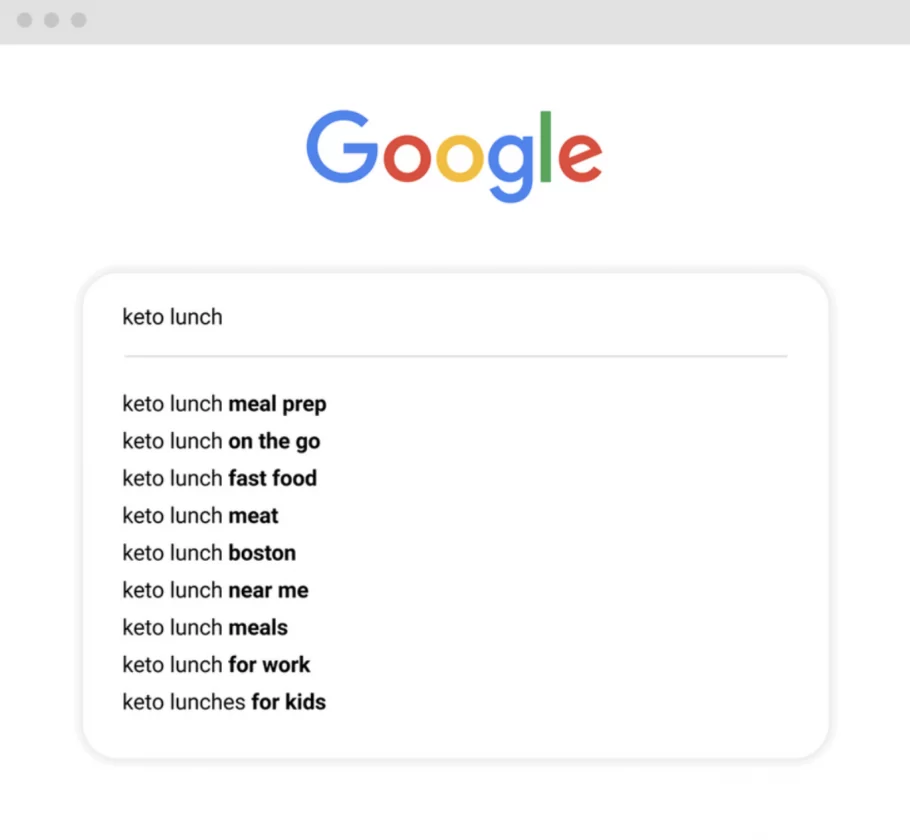
As a content creator, there is one key factor you can start using today that will dramatically improve the searchability of your content: keywords. There are other factors attributed to SEO, but keywords carry a lot of weight and are a simple way to get started.
Keywords help define the topic of your content. Think of it as a bridge between the content you create and what people are searching for.
When someone starts typing a query into Google, suggestions appear. These are good examples of potential keywords to focus on. It's an easy way to do some quick keyword research if you're not sure where to start (more on keyword research below).
Types of keywords
There are two main types of keywords: short-tail and long-tail.
Short keywords often consist of one or two words that cover a very broad topic. The problem with short-tail keywords is that they cover a wide range, resulting in a lot of competition for search results position on the first page.
However, long-tail keywords will be your bread and butter. They sound more like phrases and have a clearly defined intent.
Let's revisit the vegetarian enchilada research.
A short keyword might be “vegetarian enchiladas.” Since this is a broad concept, your content is unfortunately likely to get lost in the sauce. Not only will you be competing with other recipes, you may be competing with products being sold like frozen vegan enchiladas or vegan enchilada cheese.
However, the “quick vegetarian enchilada recipe” is more specific and has a clear purpose. There will be less competition from those ingredients or products mentioned earlier.
It's worth noting that you don't want to get too niche with your long-tail keywords, because even though the competition may be less, it probably won't be a realistic query someone would type into the search bar.
You want to hit that sweet spot between not too vague and not too specific. A good way to achieve this is to keep your long-tail keywords between 3 to 5 words.
Search for the keyword
In general, you want to have one primary keyword and two secondary keywords on the page/post you are optimizing.
As mentioned earlier, typing in some short-tail keywords and seeing what comes up in Google suggested searches is a good way to start identifying your long-tail keywords.
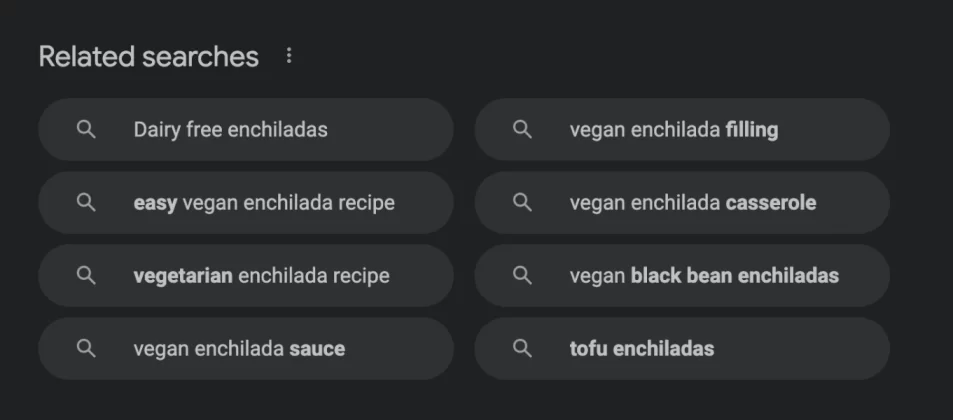
Another easy way to find keywords is to use LSI (Latent Semantic Indexing) keywords. Don't worry about the fancy wording it represents. This is basically another quick Google search hack to find keywords.
Let's say you know that your primary keyword is “quick vegetarian enchilada recipe.” LSI results are a good reference point for secondary keywords. These are the related searches you see at the bottom of the Google search page. Just scroll to the end of the page and voila!
Keywords in action
The general rule for using keywords on a page is as follows:
- In the page title and URL
- In at least one title (H1 tags)
- In at least one subheading (H2 and H3 tags)
- In the first paragraph
- In the last paragraph
- In the meta description*
- In the alt text of a single image*
*Locating/editing the meta description and ALT text varies slightly depending on your hosting platform. Check out the helpful links below if you're not sure where to find them!
For WordPress: Meta Description | Alt text
For Squarespace: Meta Description | Alt text
If you're using a hosting platform other than these two, a quick Google search for your platform can give you the answers you need!
This is where a lot of people get stuck. It may seem like a lot, but it's actually a very simple practice once you get the hang of it. In fact, you can even break up the keyword a bit in the sentence and Google will still recognize it.
Pro tip: What you don't want to do is what's called “keyword stuffing.” This happens when you use your keywords as many times as possible, “filling” the page with them. Google reads this as spam and your site can be penalized as a result.
You want to use your keywords in a way that feels natural.
This is also where “keyword density” comes into play. Keyword density helps ensure your content is optimized, but not overstuffed. Good organic keyword density is between 1-2%.
Some tools in your website hosting platform can help you calculate this. Otherwise, there are plenty of free keyword density calculators online.
Search engine optimization for social media
The general rule for using keywords on a page is as follows:
- In the page title and URL
- In at least one title (H1 tags)
- In at least one subheading (H2 and H3 tags)
- In the first paragraph
- In the last paragraph
- In the meta description*
- In the alt text of a single image*
Here are some best practices for using SEO on social media in general:
- Quality over quantity
- Have a content strategy
- Make sharing easy
- Improve your profile
- Interact with your audience
- Create compelling captions
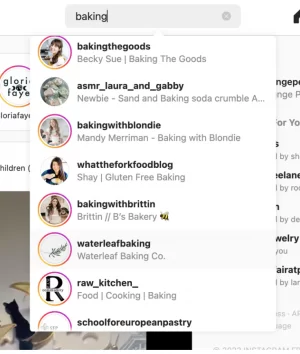
Although the bulk of the SEO we talk about is designed for the web, SEO still plays a role on social media. After all, more and more people these days are using social media as a search engine, especially on TikTok.
Is search engine optimization necessary for creatives?
Google recently announced an update to its SEO best practices. This Helpful Content Update may be more confusing than helpful to some.
What the update entails is that person-first content (i.e. content designed to please people first and algorithms second) is more important than SEO. Great, so you can't worry about SEO now, right?
Not so fast. The update also indicates that SEO is still a useful, if not essential, tool. So, what is it?
Let's understand what the takeaway is here.
Google is right to highlight the importance of person-focused content. You create content for people, not algorithms.
Your content should sound natural, and your voice should shine through. You don't want to look like a robot for the sake of SEO. However, it should still be useful and valuable to people, as they should leave your post or page satisfied.
If your intention is to rank for SEO purposes only, you'll need to rethink why you're creating content.
However, you don't want to completely ditch SEO either. It still helps your personal brand grow when applied to person-first content.
TL;DR: Create content for people first, implement an SEO strategy second.
We live in the information age and SEO has become an important part of our daily digital lives. It may be a little daunting at first, but ultimately it's a tool that exists to help your meaningful content cut through the noise and reach the people who matter.